



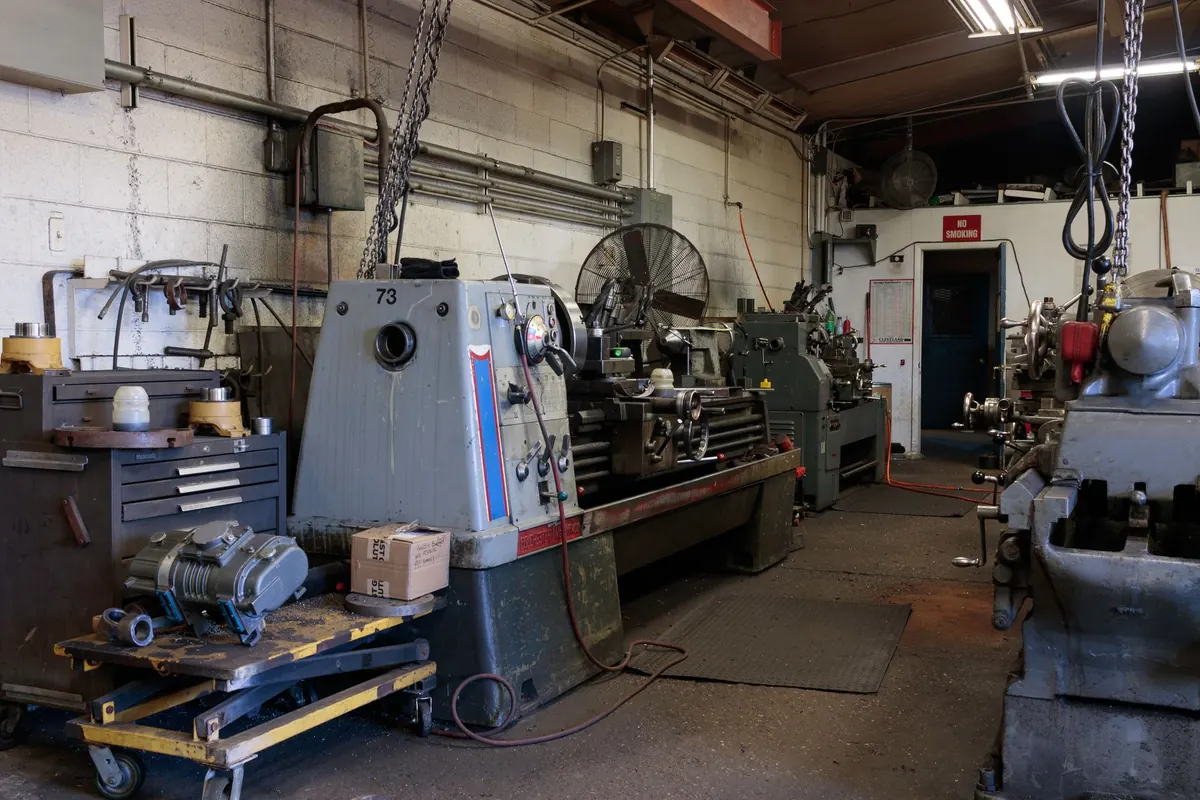
Energy has slipped down the agenda since the crisis years, and that is precisely the problem. Wholesale prices have come back from their worst peaks, but they have not returned to where they were before 2021, and the non-commodity parts of the bill — network charges, policy levies, capacity costs, standing charges — have kept climbing. For a fabricator in Rochdale, a textile finisher in the Colne Valley or a food processor near Skipton, that gap is still being paid out of margin, month after month, on every unit.
The manufacturers coping best with this are not necessarily the ones with the cheapest contract. They are the ones who know what they use, when they use it, and what it costs per unit of output. Here is what is still driving the numbers in 2025, and what you can realistically do about it.
Why the bill has not gone back to normal
Business energy contracts do not work like domestic ones. There is no price cap, no default tariff and no supplier obliged to offer you a fair rate. When your fixed term ends, the supplier's out-of-contract rate applies until you agree something new — and those rates are usually the most expensive on the market.
Underneath the wholesale element sits a growing stack of fixed and semi-fixed costs: distribution and transmission charges, the Climate Change Levy, capacity market costs, meter and data charges, and supplier margin. Several of these are recovered through standing charges, which means you pay them whether the plant is running or not. Sites on half-hourly metering also face time-of-use network charges, where power used during the weekday peak costs materially more to transport than power used overnight or at weekends.
Renewals signed during the volatile periods are still working through the system. If your contract was agreed when wholesale prices were high, you may be paying above the current market and not know it. It is worth requesting a current quote at least once a year, even if you are mid-term, purely as a benchmark.
Where the pressure actually sits on site
Energy intensity varies enormously between businesses of similar size. A small press shop can spend more on electricity than a warehouse ten times its floor area. The usual suspects in Pennine manufacturing are consistent:
- Compressed air. Leaks, open blow-offs and oversized pressure setpoints waste more than most managers expect. It is often the single biggest electricity load after process machinery.
- Motors, pumps and fans. Older fixed-speed drives running flat out against a throttle or valve.
- Process heat. Drying, curing, melting, washing and steam distribution, including poorly insulated pipework and flanges.
- Refrigeration and chilling. Condensers that have not been cleaned, doors left open, controls set colder than the process needs.
- Buildings. Mill-era premises with large roofs, high bays, single glazing and draughty loading doors are expensive to heat and awkward to light.
There is also a cost that never appears on the energy invoice: the way demand peaks are set. A poorly sequenced start-up at 6am can set a maximum demand level that you pay for across the whole month.
The support schemes worth checking
Support for business energy costs has thinned out since the crisis-era schemes closed, but several routes remain open. Eligibility rules change, so confirm current details before you build a plan around any of them.
- Climate Change Agreements. Energy-intensive sectors — including textiles, metals, food and drink, plastics, paper and ceramics — can qualify for a substantial discount on the Climate Change Levy by meeting agreed energy or carbon targets.
- Capital allowances. Full Expensing and the Annual Investment Allowance can make efficient plant and machinery considerably cheaper in cash terms. Speak to your accountant about how the rules apply to your spend.
- Industrial energy funds. Government funding rounds for industrial decarbonisation and efficiency have opened and closed in phases. Check the current window on GOV.UK or with your local growth hub rather than relying on last year's information.
- Made Smarter. Funded support for digital adoption, including energy monitoring and data capture, is available across the North West and Yorkshire.
- Growth hubs and combined authorities. West Yorkshire, Greater Manchester, South Yorkshire, York and North Yorkshire, and Lancashire all run business support programmes that can part-fund audits and capital projects.
- Demand flexibility. If you can shift or shed load at short notice, flexibility markets can pay you for it.
One underused route: if your business qualifies as a microbusiness, you can escalate an unresolved billing dispute to the Energy Ombudsman rather than fighting the supplier alone.
Quick wins that need no capital
Before anyone signs off a solar array, spend a month on the basics. These cost time, not money.
- Fix your data. Check meter serial numbers and reads against invoices, query estimated readings, and reclaim any credit balance sitting with the supplier.
- Benchmark. Work out kWh per tonne, per batch or per shift, so improvements are measurable rather than anecdotal.
- Survey the compressed air system outside production hours, when leaks are audible. Then reduce system pressure by a bar if the equipment allows and switch off the compressor when lines stop.
- Reset setpoints. Heating, hot water, chillers and dryers are frequently running colder or hotter than the process requires.
- Check timers and shutdown routines. Extraction, ventilation, lighting and idle machine modes are common sources of out-of-hours consumption.
- Look at reactive power charges on your bill. If they are significant, power factor correction may pay back quickly.
Getting the contract right
Start the renewal conversation six to twelve months before your end date. Automatic rollovers are almost always poor value. Ask for a full breakdown of what is included: wholesale, capacity, distribution, transmission, meter charges and any broker commission. Consider buying in tranches rather than fixing the whole volume on one day, and think about whether a fixed or flexible product suits your production profile.
Ask for access to your own half-hourly data. It is your consumption, and having it makes every subsequent decision easier. If you use a broker, make sure the commission is disclosed in writing.
Medium-term projects worth costing
Once the low-cost work is done, the case for capital projects becomes much clearer. LED lighting with controls, variable speed drives on pumps and fans, higher-efficiency motors, and waste heat recovery from compressors, chillers or ovens all tend to pay back without depending on subsidy. Solar PV suits large mill and warehouse roofs, and battery storage can shave the peaks that drive your network charges.
Two cautions. Grid connection capacity is constrained in parts of the region, so lead times for new on-site generation can be long — start enquiries early. And take professional advice on payback assumptions, grid applications and planning; optimistic spreadsheet models are the main reason efficiency projects disappoint.
A plan for the next quarter
Give energy a named owner. Not a committee — a person, with an hour a week and a mandate to ask awkward questions. Pull twelve months of half-hourly data and build a simple load curve. Walk the three biggest loads on site and write down what you find. Fix the no-cost items within thirty days. Then price two or three capital projects properly, with real quotes, and check which funding windows are open before you commit the capital.
Finally, write down your true all-in cost per kWh — including every non-commodity charge — and review it at each renewal. Manufacturers who can state that number without checking are the ones who tend to keep their margins.
Photo: J E / Pexels
Related posts
More stories you’ll love reading